
The selection of an appropriate cooling system is an essential factor for maintaining operational temperatures in buildings and industrial sites. The two most frequently used systems in this context operate through either cooling towers or chillers. The two systems share a common purpose of heat extraction but operate through distinct mechanisms that match different building usage patterns.
Many facility owners and operators don’t know what they need: a cooling tower or chillers. The answer depends on building dimensions, cooling needs, available funding and building operating requirements.
Sky Mak Technical Services explains cooling towers and chillers through a blog that describes the systems in basic terms, together with their operational functions, advantages, disadvantages and installation process.
Understanding Cooling Systems in Simple Words
- The systems need brief explanations before their comparison begins.
- A cooling tower removes heat from water by allowing it to cool through air contact.
- A chiller removes heat from water using a refrigeration process.
- The two systems function together in large commercial and industrial operations, although there are situations that require only one system to operate.
What Is a Cooling Tower?
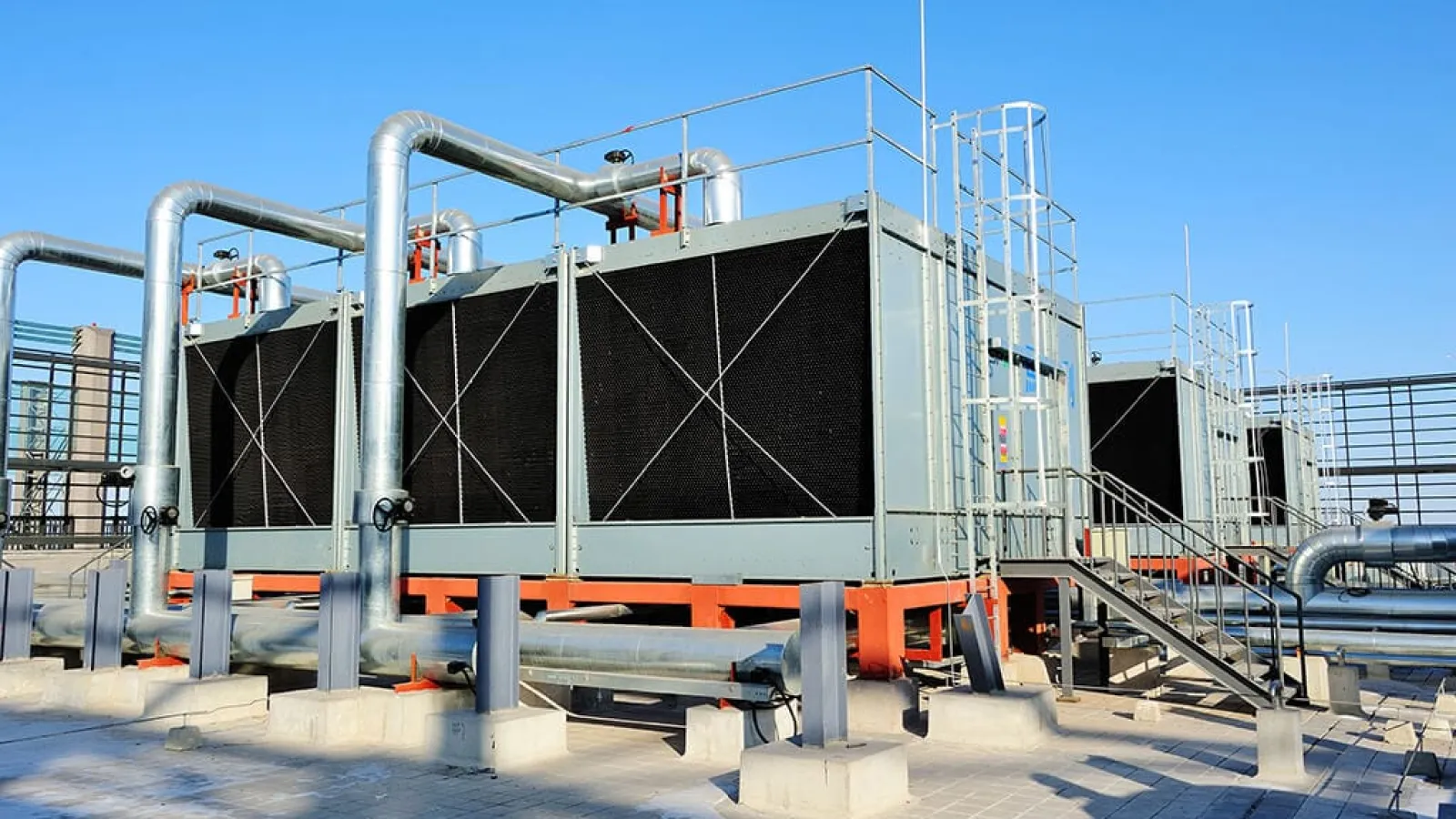
A cooling tower is a heat rejection system. It removes heat from warm water by exposing it to air. As a small portion of water evaporates, the remaining water cools down and is reused in the system.
How a Cooling Tower Works
- Warm water from the process or condenser enters the cooling tower.
- The water is sprayed over fill media inside the tower.
- Air passes through the tower using fans or natural airflow.
- Heat escapes as water evaporates.
- Cooler water is collected and sent back into the system.
Common Uses of Cooling Towers
- Power plants
- Manufacturing facilities
- Large HVAC systems
- Refineries and chemical plants
- District cooling plants
What Is a Chiller?
A chiller is a machine that removes heat from a liquid (usually water or a glycol solution) via a vapor-compression or absorption refrigeration cycle. This cooled liquid is then circulated through pipes to cool equipment, industrial processes, or the air in large buildings.
While a cooling tower uses evaporation to release heat into the atmosphere, a chiller uses a refrigeration system to actively “pull” heat out of a liquid to reach much lower and more precise temperatures.
A chiller is a mechanical system that removes heat from water using a refrigeration cycle. The chilled water is then circulated to air handling units or process equipment to provide cooling.
How a Chiller Works
- The chiller absorbs heat from water.
- The refrigerant inside the chiller carries the heat.
- The heat is released through air or water.
- The cooled water is pumped back into the building.
Types of Chillers
- Air-cooled chillers – release heat directly to the air.
- Water-cooled chillers – release heat using a cooling tower.
Common Uses of Chillers
- Commercial buildings
- Hospitals
- Data centres
- Hotels and malls
- Industrial process cooling
Cooling Tower vs Chiller: Key Differences
1. Purpose
- The Cooling Tower system removes heat from water through the process of evaporation.
- The Chiller system produces chilled water through its refrigeration process.
2. Cooling Method
- The Cooling Tower system operates by utilising both air and evaporation.
- The Chiller system operates through its use of compressors, refrigerants, and heat exchangers.
3. Energy Consumption
- The Cooling Tower system requires less energy to operate than the chillers.
- The Chiller system uses more energy because it requires compressors to function.
4. Installation Cost
- The Cooling Tower system requires less money to purchase its equipment than other systems.
- The Chiller system needs a greater financial commitment for its initial setup.
Advantages of Cooling Towers
- The system operates with high energy efficiency when used in large-scale operations.
- The system functions effectively when dealing with high heat loads.
- The system requires less money to operate than chillers do.
- The system features a design that enables easy operation.
- The system can achieve extended operational life through proper maintenance.
- Industrial facilities that require continuous heat removal should use cooling towers as their optimal solution.
Limitations of Cooling Towers
- The system needs to undergo regular water treatment procedures.
- It has three main threats: scaling, corrosion, and biological growth.
- It requires additional upkeep activities.
- It requires specific weather conditions to function properly.
- Cooling towers need sufficient space to operate correctly.
- The system requires proper upkeep because a lack of maintenance causes efficiency loss, which leads to system breakdowns.
Advantages of Chillers
- Chillers provide exact temperature regulation for indoor spaces.
- It serves its intended function in commercial building environments.
- It operates as a clean, closed-loop system.
- The system delivers dependable indoor cooling for complete comfort.
- Chillers can function without external support through their air-cooled chillers.
- The industry uses chillers for applications that need constant indoor cooling.
Limitations of Chillers
- Chillers requires more electricity to function.
- It incurs higher expenses for both installation and ongoing maintenance.
- It needs expert maintenance to function properly.
Do You Need a Cooling Tower, a Chiller, or Both?
- In many large facilities, chillers and cooling towers work together.
- The chiller produces chilled water.
- The cooling tower removes heat from the chiller’s condenser.
You May Need a Cooling Tower If:
- Your industrial process generates excessive heat.
- Your business needs to achieve maximum energy efficiency.
- Your organisation does not face any difficulties accessing water.
- Your organisation currently operates equipment that requires water for cooling.
You May Need a Chiller If:
- You require specific temperature management for indoor spaces.
- Your organisation manages a commercial building or office space.
- People must work in an area that needs to limit space usage and control noise.
You May Need Both If:
- Your business operates a sizable commercial or industrial facility.
- Your organisation utilises chillers that require water for their cooling process.
- Your organisation experiences extremely high cooling requirements.
Both Systems Require Active Maintenance
Both cooling towers and chillers require regular maintenance to work efficiently and safely.
Cooling Tower Maintenance Includes:
- Cleaning and descaling
- Water treatment
- Fan and motor inspection
- Drift eliminator checks
Chiller Maintenance Includes:
- Refrigerant level checks
- Compressor inspection
- Heat exchanger cleaning
- Electrical testing
- Inadequate maintenance results in increased energy expenses, equipment failures, and reduced equipment lifespan.
How Sky Mak Technical Services Can Help
At Sky Mak Technical Services, we provide cooling system solutions that serve commercial and industrial facilities.
Final Thoughts
The selection between a cooling tower and a chiller requires consideration of multiple factors because one solution does not fit every situation. Every system has its own specific functions that determine its operational capabilities and its performance limitations. The right choice depends on your facility’s needs, budget, and operating conditions.
If you need help selecting the right cooling system for your facility, professional consultants will assist you in saving both time and money.
Contact Sky Mak Technical Services today to get expert advice and reliable cooling solutions tailored to your facility’s needs.
