
Every family needs clean water throughout the day, which they use for drinking, cooking, bathing and cleaning activities. People fail to recognise that the water quality depends on how clean the water tank is. Residential water tanks accumulate dust, sand, rust, algae and bacteria over time, despite the water appearing clear to observers. This silent buildup can affect water safety and your family’s health.
Homeowners and building managers most frequently ask the question, “How long does water tank cleaning take in residential buildings?” The answer to the question enables residents to schedule their activities while minimising disruptions, and they will see why routine cleaning proves essential.
In this blog, Sky MAK Technical Services explains the typical time required for water tank cleaning, what affects the duration, and how professional cleaning keeps your water safe and fresh.
Why Water Tank Cleaning Is Important
Inside water tanks, unclean materials such as dirt, sand, rust, algae, and bacteria accumulate over time. Daily water contamination from these substances can enter your body through your drinking water. Contaminated tanks result in stomach disorders, skin allergic reactions, bad smells, and severe infectious diseases.
Safety testing confirms that all harmful materials have been removed through the cleaning process, which provides safe water for all uses. The procedure also improves the operational duration of both the tank and the entire plumbing system.
Average Time Required for Water Tank Cleaning
Water tank cleaning in most residential spaces takes 1.5 to 4 hours of work for each tank.
Smaller household tanks require less time for cleaning compared to the extended cleaning process needed for larger building tanks and underground tanks.
Here is a simple breakdown:
- Small overhead residential tank: 1 to 2 hours
- Medium-sized tank: 2 to 3 hours
- Large or underground tank: 3 to 4 hours
The complete process requires time for all activities, including draining, manual cleaning, washing, disinfection, and refilling, which follows.
Factors That Affect Cleaning Time
The duration of the entire process depends on multiple factors that control the outcome. You can make better plans if you learn about these specific factors.
1. Size of the Water Tank
The larger tanks store more water and have more surface area for cleaning. This naturally increases cleaning time. A small villa tank is much quicker to clean than a large apartment building tank.
2. Type of Tank
The residential buildings use various water tank types, which include:
- Overhead tanks
- Underground tanks
- Plastic, concrete, or steel tanks
The larger size of underground tanks, combined with sediment buildup, results in longer cleaning durations.
3. Level of Dirt and Sediment
The tank will contain thick sludge and algae when it has not been cleaned for a long period. Removing heavy buildup takes extra time compared to small dirty tanks.
4. Number of Tanks
Some buildings have multiple tanks. The cleaning process will take longer when multiple tanks are cleaned during a single visit, but it may still be more efficient than separate visits.
5. Accessibility
- Small tanks = Easy to reach = Technicians can work more quickly.
- Small tanks & Tight Space = Hard to clean = Cleaning process also slow
- Big & more tanks also take more time to clean.
Step-by-Step Cleaning Process
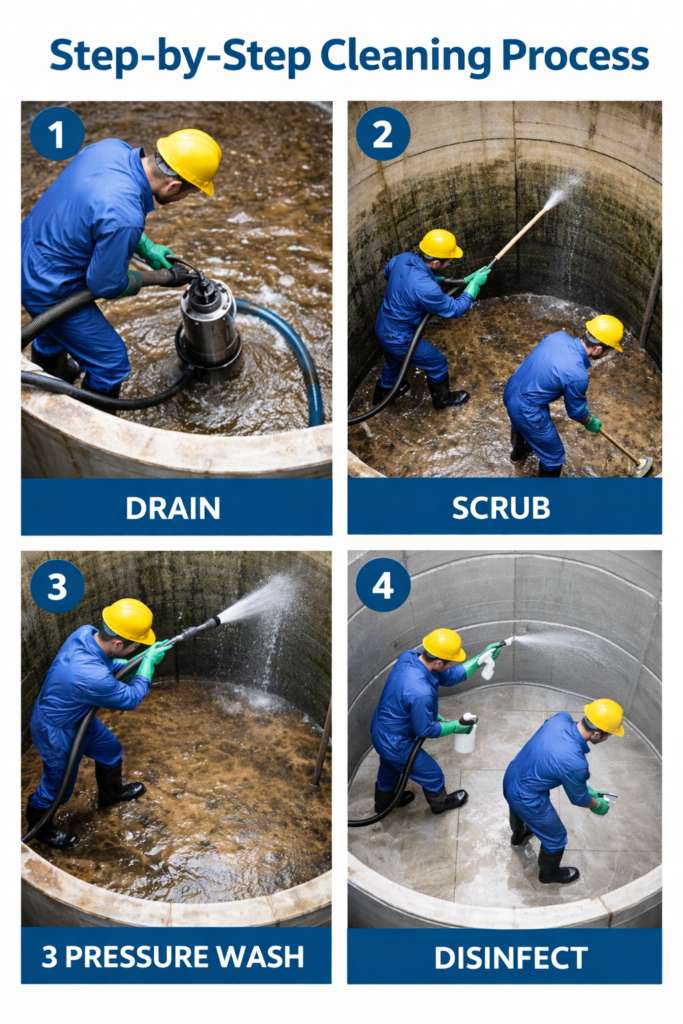
The cleaning process requires several hours because the steps involved in the work must be understood by the staff members who perform the task.
Draining the Tank
The current water in the tank gets removed through safe draining processes. The process usually requires 15 to 30 minutes, which may vary according to the size of the tank.
Manual Scrubbing
Technicians enter the tank and scrub the walls, floor and corners to remove sludge, algae and dirt. This is one of the most time-consuming steps.
High-Pressure Washing
The scrubbing process is followed by high-pressure water jets, which clean all loose dirt and remaining materials from the surface.
Disinfection
Disinfectants that meet approval standards are used to destroy all bacteria and germ contaminants. The solution is left inside for a short contact time.
Final Rinse and Refill
The tank undergoes another rinse process before it is filled with clean water.
How Often Should Residential Water Tanks Be Cleaned?
The recommended cleaning schedule for residential water tanks requires cleaning at least twice a year to maintain water quality. The water source and consumption levels of each building determine its need for quarterly cleaning according to its specific requirements.
The cleaning process needs less time because regular cleaning activities prevent heavy build-up.
Signs Your Water Tank Needs Cleaning
You should plan a cleaning schedule when you observe any of the following signs:
- Water appears cloudy or dirty
- The taps produce an unpleasant odour
- The water contains visible particles
- The tank walls exhibit a slimy texture
- Plumbing systems experience blockages with high frequency
- Immediate action against these symptoms protects against future severe complications.
Can Cleaning Be Done Faster?
The company uses advanced equipment with trained staff members to achieve operational efficiency. Companies should maintain their focus on delivering quality results while also needing to complete projects within specified time limits. The process needs proper time allocation.
The process needs proper time allocation to finish cleaning without leaving any bacteria behind.
Sky MAK Technical Services focuses on:
- The company employs trained technicians.
- The company uses professional-grade equipment.
- The company uses approved disinfectants.
- The company employs proper safety procedures.
- The process provides complete cleaning results, which take a reasonable time to achieve.
Benefits of Professional Water Tank Cleaning
- Hiring professional services saves time while they do hygienic work.
- The main advantages that customers receive from the service include
- a safe water supply that maintains cleanliness,
- protects against waterborne diseases
- preserves tank materials for extended periods.
- Professional service improves both the taste and smell.
Why Choose Sky MAK Technical Services?
Sky MAK Technical Services provides reliable water tank cleaning for residential buildings. Our company follows industry standards for safety procedures to achieve sanitary results.
Final Thoughts
People’s question is: What is the duration required to complete water tank cleaning in residential buildings? It depends on three factors, including tank size, tank condition and total number of tanks.
Regular cleaning not only keeps your water safe but also makes future cleanings faster and easier. The process of professional water tank cleaning requires only a few hours, which will protect your health and your home.
Sky MAK Technical Services provides trustworthy, expert water tank cleaning services that protect your water supply and maintain its safety.
